Case · 03 · Redesign · Credit · International

From legacy to a real digital product.

I took a chaotic first version and turned it into a coherent product: clear language for whoever originates credit, built in agile for a project with international reach.

Client
International financial product
Role
UX/UI Designer
Duration
~2 years to release
Method
Agile · field testing

01 · Overview

A chaotic first version, with no common thread.

The project came from a messy first attempt: several designs made by different teams, each with its own perspective, with no cohesion between screens. It worked, but it felt like many products taped together.

My job was to take that process as a base and make it truly mine: understand the business deeply and bring it down to simple, clear language for someone who originates credit.

02 · Challenge

How do you unify what many teams built separately?

The challenge wasn't starting from scratch, but creating cohesion: aligning disparate designs into a single voice and translating complex business rules into something a credit user could understand without friction.

And all of it carried the weight of a high-impact international project, where every decision scaled to many markets.

The call I made

The brief said "unify the screens". I decided that was the symptom, not the problem. Screens looked different because each team had modelled the business differently — one built around the product catalogue, another around the advisor's workflow, another around the back-office record.

So instead of opening with a visual pass, I pushed to first agree on a single model of what the advisor is actually doing. Aligning the underlying logic was the unpopular route — it delayed anything visible for weeks — but harmonising components on top of three conflicting models would have made the inconsistency permanent.

03 · Process

Agile, research, and a lot of fieldwork.

Since it was a high-impact international project, I worked with an agile methodology: short cycles, constant validation, and incremental deliveries. It took around two years to reach release and field testing with real users.

  1. Owning the legacy

    I took the first version as a base, understood its business rules, and translated them into clear language for the credit user.

  2. User research

    Behavior maps and friction points, mainly with Hotjar — the software available at the time.

  3. Task-based rearchitecture

    I reorganized the flows around what the advisor needs to accomplish: renewals, sales, and client management.

  4. Wireframes & prototype

    From low to high fidelity in agile cycles, a navigable prototype to validate before building.

  5. Release & field testing

    Going to production and testing with real users in their work context.

The call I made

Inheriting work from other teams meant every change read as a critique of someone's decision. The resistance was real: each team defended its own version because it already worked in their part of the flow.

I stopped arguing from taste and moved the conversation onto evidence — Hotjar behaviour maps and field sessions. Once the friction points were on screen, the discussion changed from "whose design is better" to "where the advisor is getting lost". That reframing is what made a shared voice possible.

Back then

Hotjar

It was the tool available to map behavior and spot friction during the project.

Today I'd use

CrazyEgg + NotebookLM

A more flexible tool like CrazyEgg, plus testing supported by NotebookLM to avoid interrupting users in their daily activities.

04 · Solution

One product, with one single voice.

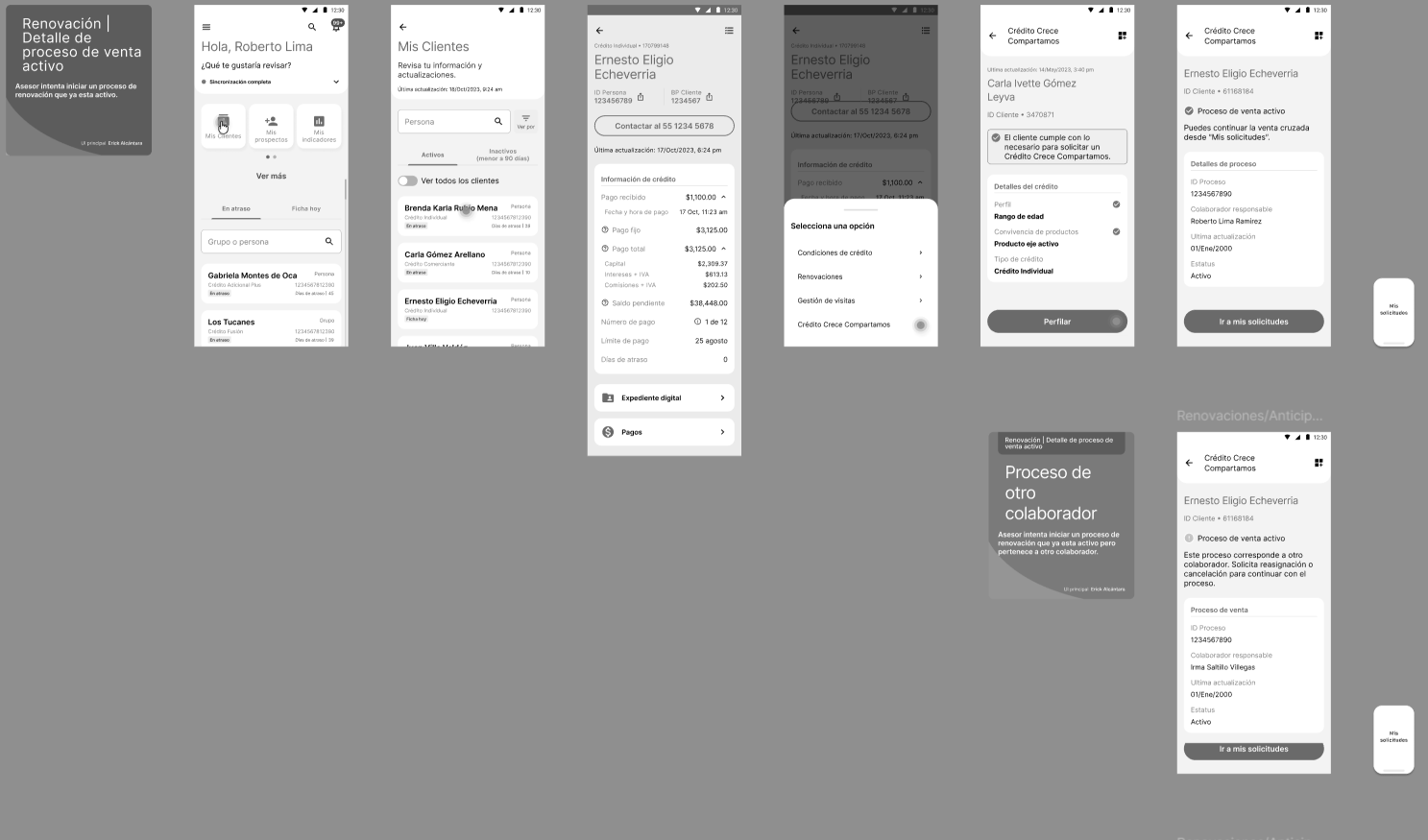
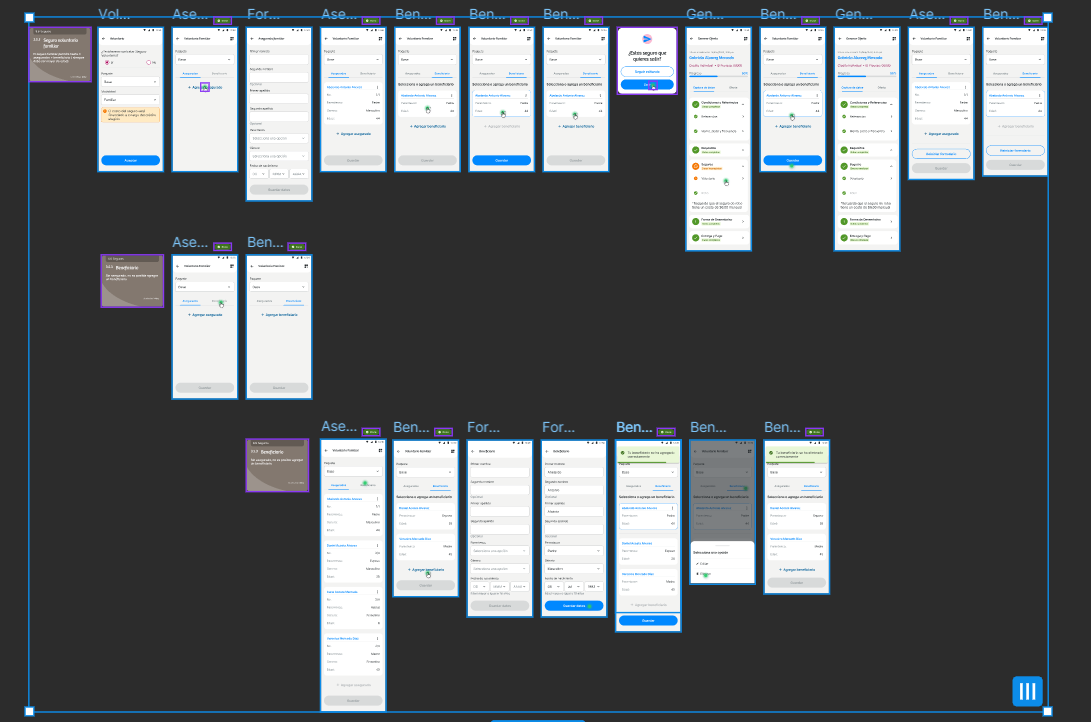
I rebuilt the renewal, sales, and client-management flows with a coherent interface and language the advisor gets on the first try. From wireframe to navigable prototype.

Interactive prototype

Click the stepper steps to move the credit flow forward
Decision · 01

One single voice

I unified the disparate designs from different teams into a coherent visual and verbal language.

Decision · 02

Business in plain language

I translated complex credit rules into clear screens for whoever originates the credit.

Decision · 03

Task-based flows

Renewal, sales, and clients organized by what the advisor wants to accomplish, not by technical modules.

What we gave up to get there.

What we kept

Familiar terminology

Advisors had years of muscle memory with the legacy vocabulary. I kept those terms even where clearer alternatives existed, rather than force retraining across markets mid-migration.

What we deferred

Per-market customisation

Each market wanted its own variations. I held one shared flow for release and logged local adjustments as post-launch work — branching early would have recreated the very fragmentation we were undoing.

05 · Outcome

From chaotic to coherent, and in production.

~2yrs

From legacy to release

Ideation, redesign, and field testing with real users.

3→1

Models unified

Three team-specific ways of modelling the business collapsed into one shared flow.

Multi

Market rollout

One flow released across markets instead of a variant per country.

Where these figures come from. Internal project records and Hotjar behaviour data gathered during the redesign, plus field sessions with advisors in their own work context. These are internal product figures, not an audited study — the duration covers ideation through release and field testing.

What I take away from this project

Curious about my work?

Let's chat. I'm always open to understanding a project better, no matter how challenging or complex it seems.

Let's talk →